
Analakshya
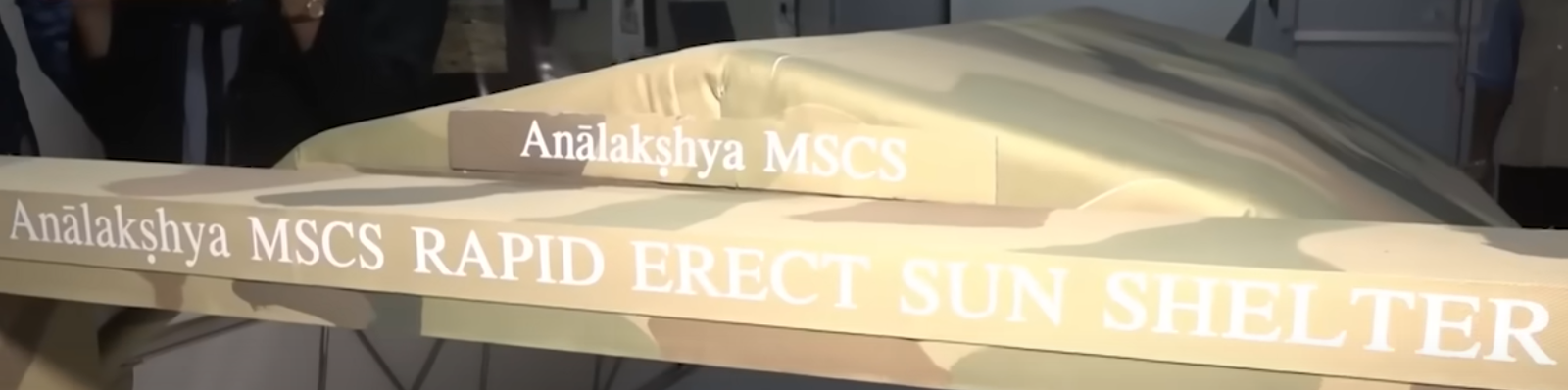
Ø IIT Kanpur has created a metamaterial-based shield called Analakshya that can make Indian bunkers, aircraft, and soldiers invisible to enemy radar and thermal screening.
Ø This technology is compared to the invisibility cloak from the movie Mr. India.
v Technical Details
Ø The material is designed to absorb radar waves, reducing the radar signature of objects.
Ø It also reduces the thermal signature, making it invisible to thermal imaging.
Ø Optical camouflage is integrated to avoid detection by visual means.
v Demonstration
Ø The demonstration shows how the material works by placing it between radar receivers and reflectors, making the object undetectable.
Ø Thermal screening tests also show the material's effectiveness in hiding objects.
v Applications
Ø The technology can be used for various military assets such as bunkers aircraft shelters, and other defence equipment.
Ø It is designed to be portable and can be quickly deployed in different locations.
v Development and Testing
Ø The research began around 2010 and involved developing broadband absorbing materials.
Ø The patent was granted in 2018, and since then, extensive testing has been conducted in laboratories and field trials.
Ø The technology has been transferred to a company named Metatav for production and marketing.
v Importance and Impact
Ø This technology is crucial for Indian defence, especially given the geopolitical context with neighbouring countries.
Ø It provides a significant advantage by making Indian military assets undetectable to enemy radar and thermal imaging systems.
v Global Context
Ø The technology is unique and not widely available globally, making it a significant achievement for India.
Ø Other countries like Russia have claimed similar technologies but their effectiveness and practical use are questionable.
v Future Implementation
Ø The trials are complete, and the proposal has been sent to the central ministry for approval.
Ø The implementation of this technology in the Indian defence system is expected to be a game-changer.
Professor's
v The research on metamaterials started around 2010 with a focus on broadband absorption.
v The team, including Professor Vaibhav Srivastava, worked on developing materials that could absorb radar waves across a wide frequency range.
v The patent for this technology was granted in 2018, followed by extensive testing and field trials.
Practical Applications:
v The material can be used to make various military assets invisible to radar and thermal detection.
v It is designed to be versatile and can be quickly deployed in different locations.
Geopolitical Significance:
v Given the geopolitical tensions with neighbouring countries, this technology is highly important for enhancing India's defence
 December 27, 2024 - BY Admin